YouCam API Hackathon 2026 · Apparel VTO + Skin AI

The same t-shirt.
Two customers.
One of them can’t see it.

This is one product, one colourway, rendered on two real people. Nothing has been edited. On the left the garment has almost the same brightness as the skin it sits on — so its edges stop existing.

Disappears A pale blush t-shirt on a light-skinned model. The shirt is so close to his skin tone that its outline is hard to make out.
Blush Crew Tee · Fitzpatrick II Reads as bare skin at the neckline, and as a blank shape in a listing thumbnail.
score 13.7 / 100 · contrast 1.12:1 · ΔE 5.5
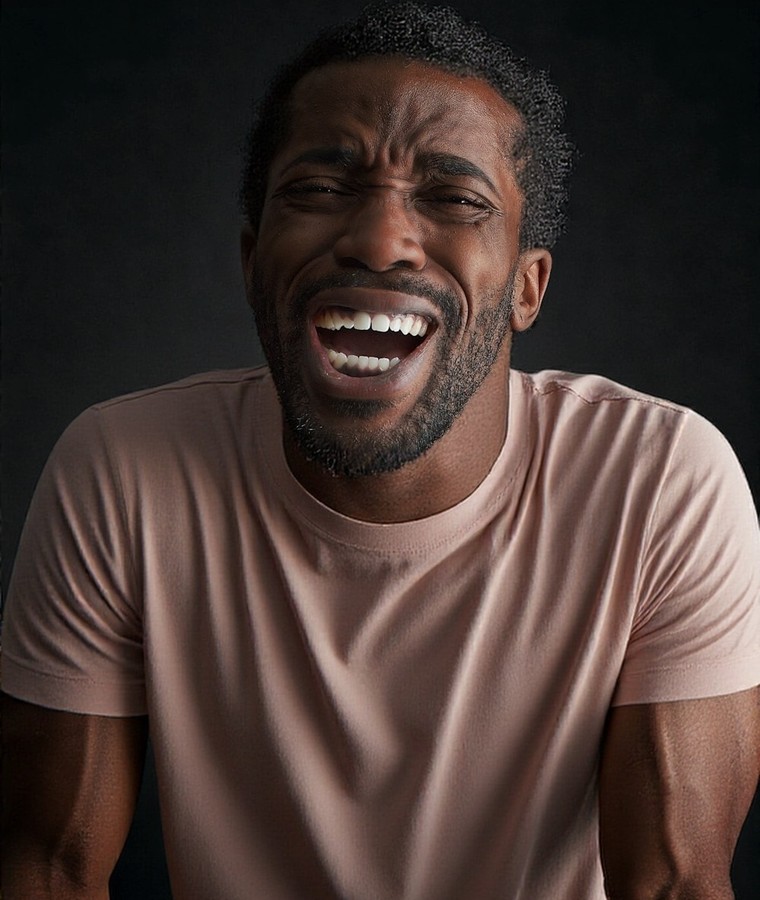
Reads clearly The same pale blush t-shirt on a deep-skinned model, where it stands out sharply against the skin.
Blush Crew Tee · Fitzpatrick VI Same garment, same photo pipeline. The edges are unambiguous.
score 93.0 / 100 · contrast 4.55:1 · ΔE 40.2

The brand shot this tee once, on one model, and never found out. ShadeSpan finds out — in two minutes, before the season ships.

And it cuts both ways

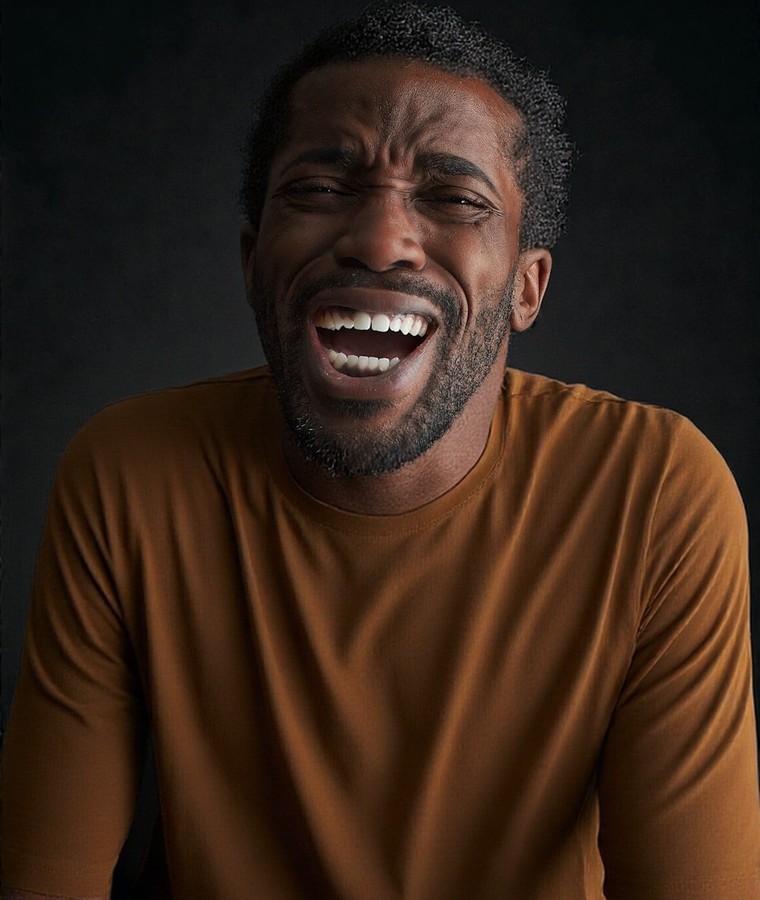
This is not a story about one kind of skin. The exact same failure happens at the other end of the range — a chocolate brown that is crisp on the lightest tone and muddy on the deepest.

Disappears A chocolate brown long sleeve top on a deep-skinned model, blending into the skin tone.
Chocolate Long Sleeve · Fitzpatrick VI
score 18.9 / 100 · contrast 1.41:1 · ΔE 8.9
Reads clearly The same chocolate brown long sleeve top on a light-skinned model, standing out sharply.
Chocolate Long Sleeve · Fitzpatrick I
score 93.6 / 100 · contrast 4.58:1 · ΔE 43.5

Why nobody catches this today

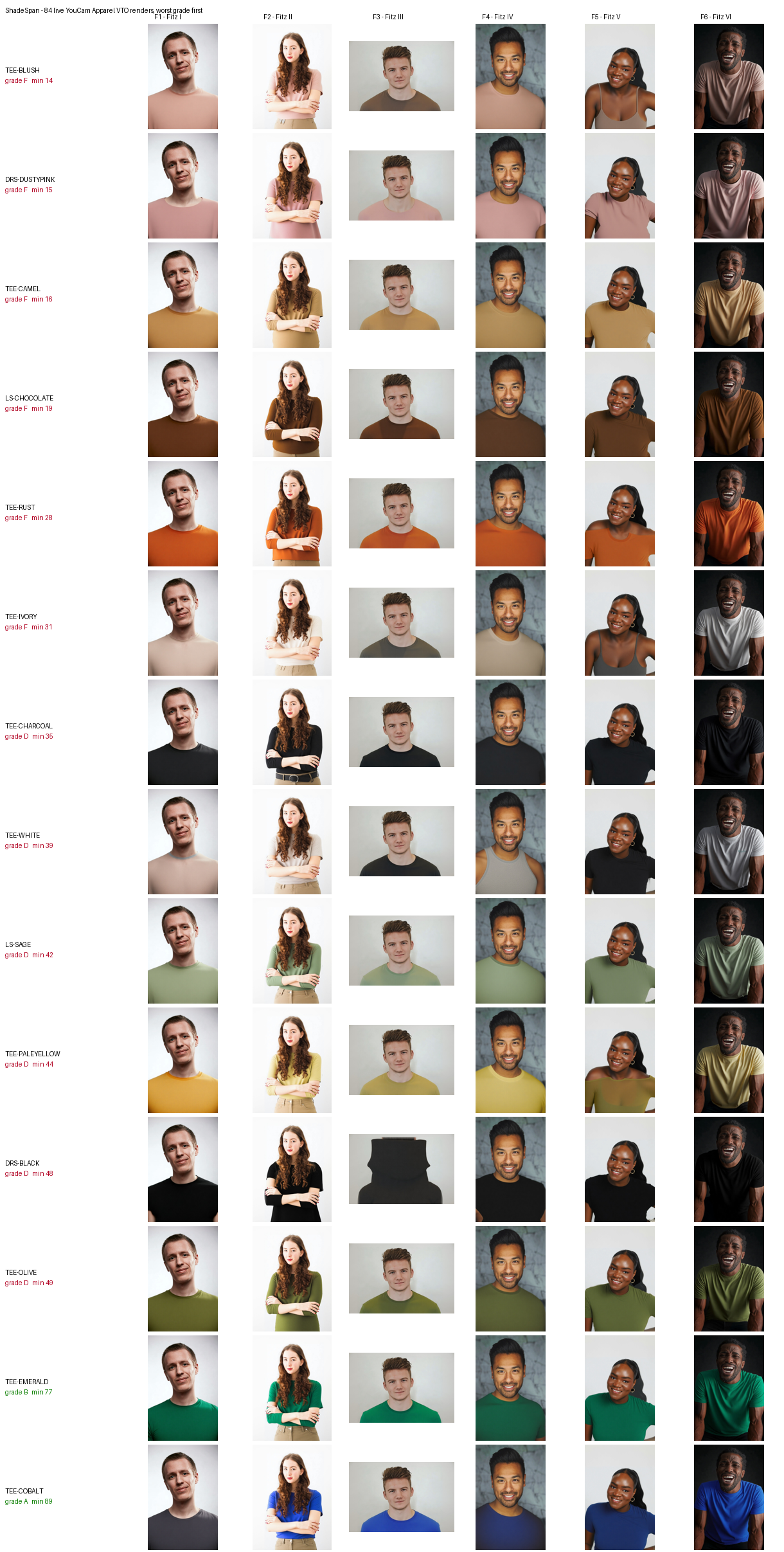
To check a 14-piece capsule properly you would photograph every garment on six different models. That is 84 separate shots and about a week of studio time, for one collection.

So nobody checks. The colour that disappears ships anyway, and the brand only learns about it months later — as a line in the returns data that says “style and colour”, with no way to trace it back to which garment on which customer.

30–35%

Return rate for US online apparel — roughly double the e-commerce average of 19.3%.

~23%

Of retail returns are attributed to style and colour dissatisfaction, not size or fit.

84

Photo shoots needed to check one 14-piece capsule across six skin tones. ShadeSpan does it in about two minutes.

Sources: NRF 2025 Retail Returns Landscape; industry category benchmarks. Colour is not the biggest driver of returns — fit is — but it is the one nobody currently measures before launch.

What ShadeSpan does

1 · Render

Calls YouCam Apparel VTO once for every garment-and-person pair, across a panel spanning Fitzpatrick I to VI. 84 renders, about 168 API units.

2 · Measure

Scores each pair on how clearly the garment separates from that skin tone, using published colour science — brightness contrast, perceptual colour distance, saturation.

3 · Grade

Grades each garment on its worst skin tone, never its average, and writes a report naming exactly which garment fails on whom.

The whole catalogue at once

14.3% of garments hold a passing grade on every skin tone. Two out of fourteen.
A grid of 84 photographs: fourteen garments down the side, six skin tones across the top, each cell showing that garment rendered on that person, ordered worst grade first.
Every garment × every tone, worst grade first. Rows that stay flat across all six columns are the safe colourways; rows that collapse at one end are the ones to fix.
GarmentGradeWorst scoreFails hardest on
Blush Crew TeeF13.7Fitzpatrick II, I
Dusty Pink Shift DressF14.6Fitzpatrick I, II
Camel Crew TeeF15.7Fitzpatrick IV, III
Chocolate Long SleeveF18.9Fitzpatrick VI, V
Rust Crew TeeF27.8Fitzpatrick V, IV
Ivory Crew TeeF31.4Fitzpatrick II, I
Emerald Crew TeeB76.8Fitzpatrick VI, I
Cobalt Crew TeeA88.8Fitzpatrick VI, I

The pattern is not random. Pinks and ivories collapse on the fairest tones, chocolate and rust on the deepest, camel in the middle. Cobalt and emerald clear everyone.

Why a simple brightness check isn’t enough

The emerald tee on Fitzpatrick V measures 1.01:1 brightness contrast — the garment and the skin are, in pure lightness terms, identical. A naive checker would call that the worst failure in the catalogue.

It is actually one of the best cells in the run, scoring 86.9. Green against brown skin is separated by hue, not brightness, and human vision segments on either cue. So ShadeSpan measures both, and takes the stronger one.

That is the difference between a tool a merchandiser trusts and one they switch off after the first wrong answer.

What a brand gets

Cut the bad colourway early

See which colours fail, and on whom, while there is still time to drop, recolour or re-shoot them.

Spend the photo budget precisely

The report names the exact garment-and-tone pairs that need a second model — instead of shooting everything on everybody.

Fewer avoidable returns

Stop product pages over-promising on a colour that vanishes against the buyer’s skin.

Cheap enough to be routine

About 168 units per capsule — roughly one shopper try-on session — informing the entire season.

Built on the YouCam API

FeatureEndpointUsed for
Apparel VTOPOST /s2s/v2.0/task/clothall 84 renders
Skin AIPOST /s2s/v2.0/task/skin-analysisper-model skin condition scores

The report also checks its own evidence. A try-on can quietly return the model’s original clothing, which would leave the report claiming a garment fails next to a photo showing something else. ShadeSpan measures the colour each render actually produced and flags the ones that drifted — 13 of 84 here. It is a heuristic, so it warns and never changes the grade.